

What Should Buyers Know Before Buying a Home on Wilmington Island, Georgia?
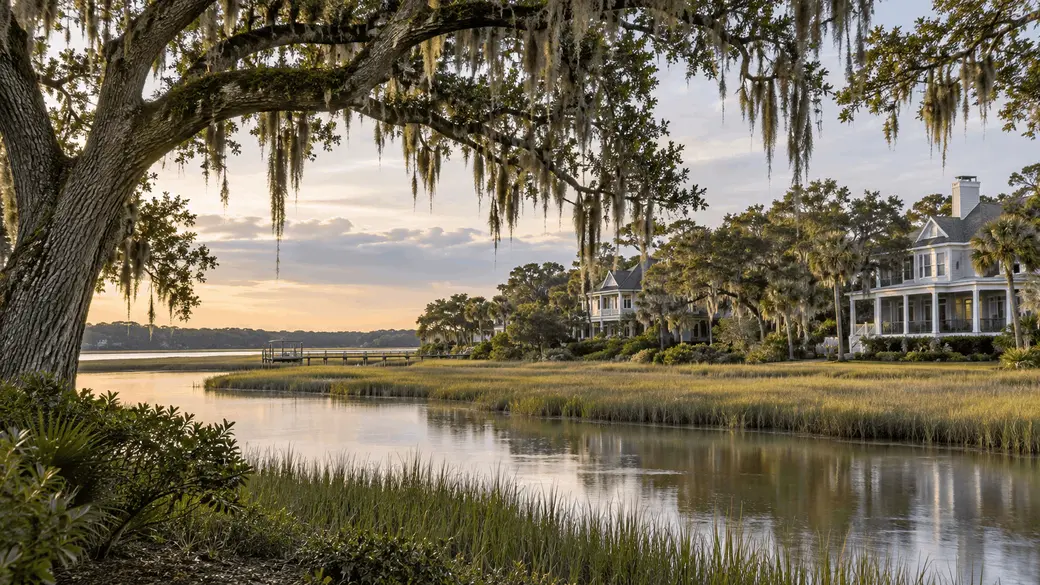
What Should Buyers Know Before Buying a Home on Wilmington Island, Georgia?
Wilmington Island is often one of the first areas that comes up when someone tells me they want to live near Savannah but also wants a more coastal, residential setting.
It sits east of Savannah on the route toward Tybee Island, with waterways, marsh, established neighborhoods, local businesses and a housing stock that can range from modest older homes to renovated properties and waterfront residences.
But buying on Wilmington Island is not as simple as deciding that you like “island living.”
Two homes only a few streets apart can have very different flood considerations, insurance costs, lot characteristics, renovation histories, HOA structures and values.
That is why I encourage buyers to evaluate Wilmington Island at two levels:
First, does the location fit the way you want to live?
Then:
Does this particular property make sense within that location?
Both matter.
Wilmington Island Is Not One Neighborhood
One of the first things buyers should understand is that Wilmington Island is not a single master-planned community with one style of house, one HOA or one set of amenities.
It is a collection of established residential areas spread across the island.
That creates variety.
Depending on where you look, you may encounter:
-
Traditional single-family homes
-
Ranch-style homes
-
Homes built across several different decades
-
Renovated older properties
-
Newer infill construction
-
Townhomes and condominiums
-
Marsh-oriented properties
-
Waterfront homes
-
Properties with docks or boating access
-
Interior residential lots without direct water access
That variety is part of the appeal.
It also means buyers need to be careful about making broad assumptions.
A statement such as:
“Homes on Wilmington Island sell for around X.”
is not particularly useful unless we know what type of home, where it sits, its condition, lot characteristics and what buyers are comparing it with.
Where Is Wilmington Island?
Wilmington Island sits east of Savannah. Savannah's tourism organization describes Wilmington Island and the nearby islands as coastal communities between Historic Savannah and Tybee, while Georgia's Department of Natural Resources identifies Islands Expressway as a primary route connecting Wilmington, Whitemarsh and other islands with Savannah.
For many buyers, that geography is part of the attraction.
You can live outside the dense urban environment of downtown Savannah without being too far away.
You are also positioned along the route toward Tybee Island and the coast.
But location should still be tested against your actual routine.
Drive the Commute Before You Buy
A map can make Wilmington Island look close to almost everything.
That does not mean every trip feels the same at every time of day.
Islands Expressway is heavily used by residents as a commuter route and also carries seasonal traffic heading toward Tybee Island.
If you are considering Wilmington Island, I recommend actually driving the routes you expect to use regularly.
That might include:
-
Your workplace
-
Downtown Savannah
-
Savannah/Hilton Head International Airport
-
Appointments
-
Shopping
-
Tybee Island
-
Other places you expect to visit frequently
If possible, make those drives during the time of day you would normally use them.
A location that feels extremely convenient at 11:00 on a Saturday morning may feel different during weekday commuter traffic or a busy beach weekend.
This is not unique to Wilmington Island.
It is simply something relocation buyers in particular should experience before deciding where to focus.
Wilmington Island Can Offer Coastal Living Without Being a Beach Community
It is important to distinguish Wilmington Island from Tybee Island.
Wilmington Island has a strong coastal identity, but it is not a barrier-island beach community.
The lifestyle is more closely tied to marsh, rivers, creeks, boating and residential island living.
Visit Savannah specifically highlights Wilmington Island's boating culture and waterfront environment.
For someone who wants to be near the water without necessarily living directly at the beach, that distinction may be appealing.
It also affects what buyers need to evaluate.
A marshfront home.
A home with deep-water access.
A property on a tidal creek.
And an interior home a few streets away.
They may all be marketed as Wilmington Island properties, but they should not be evaluated exactly the same way.
Waterfront and Marsh Properties And Additional Due Diligence
Water can be one of the most desirable characteristics of a Wilmington Island property.
It can also add complexity.
If a property includes or advertises waterfront, creek, marsh, dock or boating features, I want buyers to understand exactly what they are purchasing.
Questions may include:
-
Is the water tidal?
-
What happens at low tide?
-
Is there usable boating depth?
-
Is a dock already permitted?
-
What is the condition of the dock?
-
Are there shared-access rights?
-
Who maintains it?
-
Are additional permits required for repairs or improvements?
-
Are there marsh-buffer or coastal-resource restrictions?
-
Is the view protected in any way?
-
Could vegetation or surrounding property changes affect it?
A photograph taken at high tide does not necessarily tell you what the property looks like throughout the tidal cycle.
If boating access is important, verify the boating access.
If the view is a major reason you are willing to pay a premium, understand the property rights surrounding that view.
Flood Zone Should Be Property-Specific
Flood is one of the first topics that comes up when buyers hear “island.”
The right response is not:
“It is on an island, so it floods.”
And it is not:
“The house has never flooded, so flood is not an issue.”
The correct approach is to investigate the individual property.
Chatham County uses FEMA Flood Insurance Rate Maps to identify different levels of flood risk. Areas beginning with A or V are generally considered Special Flood Hazard Areas, while X designations generally represent lower-risk areas. Federally regulated or insured lenders generally require flood insurance on mortgaged properties located in Special Flood Hazard Areas.
But the flood-zone letter is only part of the conversation.
For a Wilmington Island property, you may also want to understand:
-
Current FEMA flood designation
-
Base Flood Elevation
-
Available elevation certificate
-
Actual elevation of the structure
-
Flood-insurance requirements
-
Preliminary insurance cost
-
Drainage around the property
-
Known water intrusion
-
Prior flood history when available
-
Whether the home has been elevated
-
Whether improvements could trigger additional floodplain requirements
Chatham County specifically advises property owners to identify the property's flood zone and Base Flood Elevation and makes flood-zone determination and elevation-certificate resources available.
This is information to gather - not a reason to panic.
An X Flood Zone Does Not Mean Zero Flood Risk
This is another point worth understanding.
Properties in lower-risk zones may not be subject to the same lender flood-insurance requirements, but that does not mean the possibility of flooding is zero.
Chatham County notes that its flat terrain, low elevations and tidal influence contribute to flood risk throughout the coastal county.
A buyer may still choose to carry flood insurance even when a lender does not require it.
That becomes a personal risk and financial decision.
I encourage buyers to receive the information and an actual insurance quote.
Get Insurance Information Early
Flood insurance is only one insurance consideration.
Homeowners insurance can also become an important part of the Wilmington Island purchase.
Depending on the property, an insurer may care about:
-
Roof age
-
Roof material
-
Electrical system
-
Plumbing
-
HVAC
-
Prior insurance claims
-
Tree exposure
-
Property age
-
Flood designation
-
Coastal exposure
-
Previous updates
An older roof does not automatically make a house a bad purchase.
But if that roof changes the cost or availability of insurance, the buyer deserves to know that while they still have time to evaluate the decision.
The true affordability of a house is not simply:
purchase price + mortgage rate.
It is the complete cost of owning that particular property.
Drainage Matters
Flood zone and everyday drainage are not necessarily the same issue.
A property can experience standing water or poor drainage without experiencing a major flood event.
When walking a Wilmington Island property, pay attention to things such as:
-
Lot elevation
-
Grading
-
Low areas
-
Downspout discharge
-
Drainage ditches
-
Standing water
-
Soil conditions
-
Moisture around foundations or crawl spaces
-
Evidence of previous water intrusion
Savannah's coastal environment is flat and influenced by rainfall and tides, which is why Chatham County specifically identifies terrain, elevation and tidal influence as important flood factors.
If something does not look right, investigate further.
Mature Trees Are Beautiful - And Part of the Property Evaluation
One of the visual characteristics buyers often appreciate on Wilmington Island is the established landscape.
Large live oaks, palms and mature vegetation can add tremendous character.
They should still be evaluated as part of the property.
You may look at:
-
Large limbs over the roof
-
Root systems near paving or structures
-
Trees close to foundations
-
Dead or damaged limbs
-
Previous tree work
-
Drainage affected by landscaping
-
HOA or local restrictions on removal
A beautiful oak can be one of the reasons someone loves a property.
It can also require professional maintenance.
Both can be true.
Pay Attention to the Age of the House
Wilmington Island has housing built across many decades.
That means two similarly priced homes may have very different underlying systems.
Before focusing heavily on cosmetic finishes, you want to understand items such as:
-
Roof
-
HVAC
-
Water heater
-
Electrical system
-
Plumbing
-
Windows and doors
-
Crawl space or foundation
-
Moisture
-
Termite history
-
Previous renovations
-
Additions
-
Permits when applicable
-
Drainage
A newly renovated kitchen does not tell us what is happening with the electrical panel.
A dated bathroom does not tell us whether the home's major systems have been carefully maintained.
Look at the whole property.
Renovation Quality Matters More Than the Word “Renovated”
Wilmington Island has plenty of homes that have been updated over time.
When a listing says “renovated,” you want to know what that actually means.
Was the renovation primarily cosmetic?
Were plumbing and electrical systems updated?
Was structural work performed?
Were walls removed?
Were permits required?
Were professional contractors used?
Are invoices or warranties available?
When was the work completed?
A renovated property may deserve a premium over an otherwise similar unrenovated home.
But the value of that renovation depends on the scope, quality and how the work compares with other properties in the market.
Termites Are Part of Coastal Georgia
Buyers relocating from other parts of the country sometimes underestimate how much attention we give termite protection.
Warm and humid coastal conditions make termites an important ownership consideration.
For a Wilmington Island home, you want to know whether there is:
-
A current termite bond
-
Previous treatment history
-
Known termite damage
-
A transferable warranty
-
Crawl-space moisture that may create additional concerns
This is not something unique to Wilmington Island.
It is part of buying throughout coastal Georgia.
But it deserves particular attention.
Not Every Wilmington Island Property Has an HOA
Because Wilmington Island is made up of multiple residential areas rather than one master-planned community, HOA structures vary.
One property may have:
-
No HOA
-
A relatively simple neighborhood association
-
A more structured HOA
-
Condominium ownership
-
Townhome association requirements
Do not assume that rules from one Wilmington Island neighborhood apply to another.
If a property is governed by an association, review the actual documents.
Depending on the community, you may look for provisions involving:
-
Exterior changes
-
Fencing
-
Landscaping
-
Boats
-
Recreational vehicles
-
Parking
-
Rentals
-
Pets
-
Architectural approval
-
Maintenance responsibilities
-
Assessments
-
Insurance
If you have a specific plan for the property, that is the time to investigate it.
Not after closing.
Buyers With Boats Need to Ask Different Questions
If boating is one of the reasons Wilmington Island appeals to you, put that near the beginning of the property search.
There are several very different ways a homeowner can access the water.
You may want:
-
A private dock
-
Deep-water access
-
Creek access
-
Community dock access
-
Nearby marina access
-
Boat storage
-
Boat-ramp convenience
Those are not interchangeable.
A buyer who owns a particular boat should understand draft requirements, tidal conditions and practical access before paying a waterfront premium.
The property should fit the actual boating lifestyle, not simply photograph well beside water.
What About Schools?
If public-school attendance matters to your purchase, verify the specific property address through Savannah-Chatham County Public School System.
Do not rely solely on a listing portal or an old property description.
SCCPSS establishes attendance-zone boundaries and has been working through attendance-zone realignment as part of its facilities planning, so current district information should be used when evaluating an address.
I can provide official resources so you can evaluate schools based on the factors that matter to you and then incorporate your decision into the home search.
Wilmington Island Versus Whitemarsh Island
These two areas often appear together during a home search because of their proximity.
They should not automatically be treated as the same market.
A buyer may find different:
-
Price points
-
Flood considerations
-
Inventory
-
Access
-
Community features
If a buyer likes the broader island area, I generally think it makes sense to understand both rather than drawing a line on the map too early.
Sometimes the property that best fits the buyer's priorities ends up being a few minutes away from where they originally expected to purchase.
Wilmington Island Versus Skidaway Island
Wilmington Island and Skidaway Island can both appeal to someone interested in coastal Savannah, but the ownership experience can be quite different.
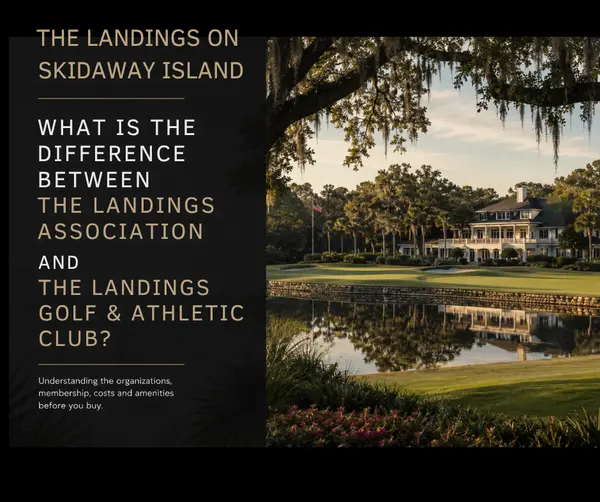
The Landings on Skidaway Island is a large private community with an extensive property owners association structure and separately available private-club amenities.
Wilmington Island is much less centralized.
For some buyers, the structure and amenities of The Landings are exactly what they want.
Another buyer may prefer the variety and less uniform structure found across Wilmington Island.
Neither is automatically better.
They are different real estate and lifestyle choices.
Wilmington Island Versus Tybee Island
These markets are even more distinct.
Tybee Island is a beach community with a substantial vacation-rental and second-home component and its own municipal regulations.
Wilmington Island is predominantly a residential island environment positioned between Savannah and Tybee.
If a buyer's primary objective is walking to the Ocean, Tybee is going to be a different conversation.
If the objective is residential island living with access to Savannah and the coast, Wilmington may deserve more attention.
Again, start with how you want to live.
What Is Happening in the Wilmington Island Housing Market?
Market conditions change, so these numbers should always be dated.
For the period ending August 2026, Hive MLS reported a Wilmington Island median sale price of approximately $450,000, with homes averaging 55 days on market. The median was down year over year, while the number of homes sold was higher than the previous year.
Those statistics are useful for context.
They are not enough to determine what an individual Wilmington Island home is worth.
The median can move based on the mix of properties that happened to sell.
A month with several waterfront sales can look very different from one dominated by smaller interior properties.
When evaluating a particular home, you want the comparables to actually resemble the subject property.
Why Wilmington Island Values Can Be Tricky
This is one of the areas where simply relying on price per square foot can become misleading.
Consider two houses with similar square footage.
One has:
-
An interior lot
-
Original systems
-
An older roof
-
No water access
The other has:
-
Marsh views
-
Significant renovations
-
Newer systems
-
Dock access
They may be physically close to each other.
That does not make them equivalent comparables.
Depending on the property, value can be influenced by:
-
Waterfront or marsh setting
-
View
-
Dock or boating access
-
Lot size
-
Renovation level
-
Age of major systems
-
Flood characteristics
-
HOA
-
Condition
-
Garage and storage
-
Outdoor living space
-
Street location
That is why I prepare a buyer-side CMA before you decide what an offer should look like.
Buyers deserve the same level of market context sellers use when pricing a property.
Look at the Property History
Before making an offer, look at more than the current listing tells us.
Depending on what is available, you may review:
-
Previous listings
-
Price changes
-
Property records
-
Renovation history
-
Permits
-
Seller disclosures
-
Tax information
-
Flood information
-
HOA documents
-
Comparable sales
Sometimes that information confirms that the property is exactly what it appears to be.
Sometimes it gives us another question to ask.
Either result is useful.
Use the Due-Diligence Period Intentionally
Once a Wilmington Island property is under contract, due diligence should be an active investigation period.
Depending on the property, that may involve:
-
General home inspection
-
Termite inspection
-
Roof evaluation
-
HVAC evaluation
-
Plumbing
-
Electrical
-
Sewer or septic considerations where applicable
-
Flood verification
-
Insurance quotes
-
HOA documents
-
Survey questions
-
Dock or waterfront evaluation
-
Contractor estimates
-
Moisture investigation
Not every property requires every specialist.
Follow the house.
If something raises a question, determine what additional information is appropriate.
Inspections Are About Understanding the House
An inspection report on an established Wilmington Island home may be long.
That does not automatically mean the house is problematic.
Inspectors document observations.
The useful part happens next.
Which items are routine maintenance?
Which are cosmetic?
Which deserve further evaluation?
Which could be expensive?
Which may affect insurance?
Which should matter to the buyer's decision?
My goal is not to convince a buyer that every inspection item is insignificant.
It is also not to make every inspection item sound catastrophic.
It is to put the information into context so the buyer can decide what they are comfortable owning.
Buying Wilmington Island From Out of State
Wilmington Island is naturally part of many Savannah relocation searches.
If you cannot visit repeatedly, we can still evaluate the property carefully.
That may involve:
-
Live video tours
-
Detailed recorded walkthroughs
-
Neighborhood and route videos
-
Seller disclosures
-
HOA documents
-
Flood information
-
Insurance quotes
-
Comparable sales
-
Inspection coordination
-
Contractor evaluations
And when I am doing a virtual tour, I want the buyer to see more than what was already shown in the listing photography.
If there is road noise, you should hear it.
If there is staining near an air vent or a soft-looking spot around an exterior door, I want to show it.
A virtual showing should help you evaluate the property - not sell you the property.
Who Might Consider Wilmington Island?
Wilmington Island may deserve consideration if you value some combination of:
-
A coastal residential setting
-
Proximity to Savannah
-
Access toward Tybee Island
-
Boating or water-oriented activities
-
Established housing
-
A range of neighborhood styles
-
Mature landscaping
-
Waterfront, marsh or creek possibilities
-
An island environment without the structure of a large private gated community
It may deserve less emphasis if your highest priorities are something such as:
-
Immediate interstate access
-
Being extremely close to the airport
-
A large concentration of brand-new housing
-
A highly structured private-club community
-
Living directly on the beach
Those priorities may lead the search elsewhere.
What Should You Do Before Making an Offer?
Understand:
-
The location within the island.
-
How the commute fits your routine.
-
Preliminary homeowners and flood-insurance considerations.
-
The age and possible condition of major systems.
-
Any water, marsh, creek or dock characteristics.
-
HOA or association requirements, if applicable.
-
Available property and renovation history.
-
Current comparable sales.
-
How the property compares with the other realistic choices available.
Then we can talk about price and terms.
Final Thoughts
Wilmington Island can offer something that is difficult to understand from a listing search alone.
It provides a coastal Savannah residential environment that can feel distinctly different from downtown, Skidaway Island or Tybee Island.
But there is no single Wilmington Island house or Wilmington Island experience.
The value and ownership considerations can change significantly from one property to the next.
“I want to live on the islands” is not enough.
Look deeper.
What does this particular location give you?
What does the property require?
What are the flood and insurance considerations?
How have the major systems been maintained?
What are comparable homes actually selling for?
How does this house fit your everyday life?
And what are you getting for the money compared with the other options available?
Once those questions are answered, Wilmington Island becomes much easier to evaluate.
Get In Touch - 1 Click to Everything
Rachael Blunt is a Savannah-area REALTOR® with Epique Realty who helps buyers and relocation clients evaluate homes throughout Wilmington Island and Greater Savannah. Her approach includes detailed property research, buyer-side market analysis, flood and insurance considerations, HOA-document review, property-history research and proactive due diligence so buyers can understand the complete property—not simply the listing.
Considering Wilmington Island? I can help you compare current properties, narrow the areas that fit your priorities and look deeper into the individual home before you make a decision.
This article is provided for general informational purposes. Real estate, flood, insurance, school-boundary, HOA and regulatory information can change and should be independently verified for the individual property and circumstances.
Categories
Recent Posts





GET MORE INFORMATION