

What Should Relocation Buyers Know Before Moving to Savannah, Georgia?

What Should Relocation Buyers Know Before Moving to Savannah, Georgia?
Relocating to Savannah can look straightforward from a distance.
Find a house you like. Pick an area that seems convenient. Make an offer. Start packing.
In reality, the Greater Savannah area is a collection of very different communities, neighborhoods and micro-markets. Two homes that are only 15 or 20 minutes apart can offer very different lifestyles, commute patterns, ownership costs, flood considerations, housing styles and long-term value.
That is why I encourage relocation buyers to begin with a bigger question than:
“Where should I buy?”
Start with:
“How do I actually want to live once I get here?”
Once we understand that, we can begin narrowing your search.
Savannah Is More Than Downtown Savannah
When someone says they are moving to Savannah, they may ultimately purchase in the City of Savannah - or somewhere else entirely within the Greater Savannah area.
Depending on a buyer's priorities, the search may include:
-
Historic and established Savannah neighborhoods
-
Midtown Savannah
-
Southside Savannah
-
Wilmington Island
-
Whitemarsh Island
-
Skidaway Island and The Landings
-
Pooler
-
Richmond Hill
-
Rincon
-
Guyton
-
Other parts of Chatham, Bryan or Effingham counties
These areas are not interchangeable.
A buyer looking for an established neighborhood beneath mature live oaks may approach the search very differently from someone wanting a newer home, larger lot, gated community, shorter commute or coastal lifestyle.
This is why I generally do not begin a relocation search by sending someone hundreds of listings.
First, we narrow the map.
Start With Your Daily Life, Not the House
A beautiful house can be the wrong house if the location makes everyday life difficult.
Before deciding where to focus, I want to understand things such as:
-
Where will you work?
-
Will you work from home?
-
How frequently will you commute?
-
How often do you travel through Savannah/Hilton Head International Airport?
-
Is downtown Savannah somewhere you expect to visit regularly?
-
Do you prefer established homes or newer construction?
-
How important is proximity to shopping and restaurants?
-
Do you want coastal or island living?
-
Are community amenities important?
-
Would you prefer a larger homesite?
-
How comfortable are you with an HOA?
-
Are boating, golf, walking trails or other recreational opportunities part of your lifestyle?
The answers usually eliminate some areas and make others much more interesting.
That is helpful.
The goal is not to look everywhere.
It is to identify the places that make sense for you.
Savannah Has Very Different Micro-Markets
One of the most important things relocation buyers should understand is that there really is no single “Savannah housing market.”
Market conditions can vary significantly by:
-
Neighborhood
-
Zip code
-
Property type
-
Price point
-
Age of the home
-
Condition
-
School district
-
New-construction competition
-
Lot or waterfront characteristics
-
HOA or community structure
A home in Richmond Hill may be competing against a very different pool of properties than one on Wilmington Island.
A renovated historic property may behave differently from a newer home in Pooler.
A luxury property on Skidaway Island should not be evaluated exactly like a similarly priced property elsewhere in Chatham County.
Even within the same general area, one segment may have substantial inventory while another remains relatively competitive.
That is why we evaluate the specific market surrounding the property rather than relying only on broad Savannah statistics.
Your Commute Can Change More Than the Map Suggests
Distances around Savannah can be deceptive.
A location that appears reasonably close on a map may feel very different depending on:
-
Bridge crossings
-
Gate access
-
Road access
-
Time of day
-
Tourism traffic
-
School traffic
-
Construction
-
The specific part of an island or community where the home is located
For relocation buyers, I recommend experiencing the routes you expect to use whenever possible.
If you will commute to work, drive it.
If you expect to spend weekends downtown, make that trip.
If airport access matters, test it.
If you are considering an island community, drive from the property to the places you will use regularly.
Ten minutes on a map does not necessarily tell you how a location will feel six months after moving in.
Decide Whether You Want Newer or Established
The Greater Savannah area offers buyers both established housing and significant newer-construction opportunities.
Neither is automatically the better choice.
Newer construction may offer:
-
More contemporary layouts
-
Newer systems and roofs
-
Modern energy-efficiency standards
-
Builder warranties
-
Fewer immediate renovation needs
-
Community amenities
It may also involve:
-
Smaller lots
-
HOA restrictions
-
Ongoing construction around the property
-
Builder competition affecting resale
-
Upgrade costs
-
Different tax considerations once the property is fully assessed
Established homes may offer:
-
Mature landscaping
-
Larger lots in some areas
-
Established streets and neighborhoods
-
More architectural variety
-
Locations closer to established parts of Savannah
But buyers may also need to evaluate:
-
Roof age
-
HVAC systems
-
Plumbing
-
Electrical systems
-
Windows
-
Moisture
-
Drainage
-
Previous renovations
-
Permitting
-
Termite history
-
Deferred maintenance
Do not assume newer means better or older means problematic.
Look at the actual property.
Coastal Georgia Makes Insurance an Early Conversation
Relocation buyers coming from other parts of the country are sometimes surprised by how much attention we give insurance and flood considerations.
I would rather address those questions before a buyer becomes emotionally committed to a property.
Depending on the home, we may want to investigate:
-
Flood-zone designation
-
Whether flood insurance may be required
-
Available elevation information
-
Homeowners-insurance availability
-
Estimated premiums
-
Roof age
-
Wind mitigation considerations
-
Previous insurance claims when disclosed or available
-
Age and condition of major systems
Insurance can materially affect the monthly cost of owning a home.
That makes it part of the purchasing decision - not simply paperwork to deal with immediately before closing.
Flood Zone Does Not Automatically Mean “Do Not Buy”
Flood terminology can make relocation buyers nervous.
The better approach is to understand what applies to the individual property.
Savannah and the surrounding coastal communities contain properties with different flood designations and elevations.
Rather than making assumptions, buyers should understand:
-
The property's current flood designation
-
Whether the lender requires flood insurance
-
What coverage may cost
-
Whether elevation information is available
-
How the property itself is situated
-
Any known property-specific history
Then the buyer can decide whether the property fits their comfort level.
My role is to help make sure the issue is identified and investigated early enough for the buyer to make an informed decision.
Look at the Complete Cost of Ownership
Purchase price is only one number.
This becomes especially important when someone is relocating and comparing communities with very different ownership structures.
The complete picture may include:
-
Mortgage payment
-
Property taxes
-
Homeowners insurance
-
Flood insurance
-
HOA or association assessments
-
Club membership, if desired
-
Landscaping
-
Utilities
-
Commuting costs
-
Maintenance
-
Anticipated repairs or renovations
A lender may approve someone for a particular purchase price.
That does not mean the buyer needs - or wants - to spend that amount.
I distinguish between the approval amount and the comfort amount early in the process.
The second number is usually more important.
Review HOA Documents Before You Own the Property
HOAs and private community associations vary considerably throughout the Savannah area.
If a property is governed by an association, buyers should understand what they are buying into.
Depending on the community, documents may address:
-
Exterior modifications
-
Fences
-
Landscaping
-
Parking
-
Boats and recreational vehicles
-
Rentals
-
Pets
-
Architectural standards
-
Maintenance obligations
-
Amenities
-
Assessments
If there is a specific issue that matters to a buyer, I can help locate the applicable section within the documents.
Do not assume that because something is permitted at your current home, it will automatically be permitted at the next one.
Historic Savannah Requires a Different Eye
Savannah's older housing is one of the things that makes the city distinctive.
It also means buyers should evaluate older properties differently from newer construction.
Charm and character are valuable.
So is understanding what is behind the walls.
Depending on the home, buyers may want to pay particular attention to:
-
Electrical systems
-
Plumbing
-
Foundation or structural conditions
-
Moisture
-
Roofing
-
Windows
-
Previous renovations
-
Permits
-
Termite activity
-
Drainage
-
Historic-district requirements where applicable
A beautifully renovated home still deserves thorough due diligence.
And an older home that has not been cosmetically updated may have excellent underlying systems.
Appearances do not tell the whole story.
New Construction Deserves Due Diligence Too
A brand-new home does not eliminate the need for careful evaluation.
Relocation buyers sometimes assume new construction means there is very little to investigate.
I still want buyers to understand:
-
Builder contract terms
-
Incentives
-
Financing incentives
-
Closing-cost offers
-
Lot premiums
-
Upgrade costs
-
HOA documents
-
Warranty coverage
-
Construction timelines
-
Inspection opportunities
-
Future phases planned around the property
Builder representatives represent the builder.
A buyer can still have their own real estate representation.
That distinction is worth understanding before walking into a model home.
Do Not Compare Homes on Price Alone
Suppose two Savannah-area homes are both listed at $600,000.
That does not mean they provide equal value.
One may have:
-
A newer roof
-
Updated systems
-
Lower insurance costs
-
No immediate renovations
-
Stronger recent comparable sales
The other may have:
-
An older roof
-
Significant deferred maintenance
-
Higher insurance
-
Upcoming HOA assessments
-
Renovation needs
The purchase price is identical.
The ownership experience may not be.
Before a buyer makes an offer, I prepare the kind of market analysis many people associate primarily with sellers.
Buyers deserve comparable-sales information too.
I want them to understand:
-
Relevant recent sales
-
Current competition
-
Property history
-
Days on market
-
Price changes
-
Condition differences
-
Market direction
-
How the asking price compares with available evidence
That does not guarantee what a home will be worth in the future.
It does give the buyer better information today.
Think About Resale Before You Need to Sell
Most relocation buyers are understandably focused on getting into the new home.
I also like to think about the eventual exit.
Circumstances change.
Jobs change.
Families change.
Plans change.
A property that fits today should ideally also have characteristics that make sense to future buyers.
That may include:
-
Location
-
Condition
-
Floor plan
-
Lot
-
Community
-
Insurance considerations
-
School district
-
Accessibility
-
Historical market performance
-
Competing inventory
We cannot predict the future.
You can still make today's decision with the future in mind.
If Possible, Spend Time Here Before Choosing an Area
There is a point where online research stops being enough.
Savannah is a city that benefits from being experienced.
If you can visit before purchasing, do more than tour homes.
Drive different parts of the area.
Visit during different times of day.
Go from Richmond Hill to downtown.
Drive from Pooler to where you expect to work.
Spend time on Wilmington Island.
Drive onto Skidaway Island.
Explore Midtown.
Look at established neighborhoods and new construction.
Sometimes buyers arrive convinced they want one area and leave preferring another.
That is not indecision.
That is exactly what the relocation process is supposed to uncover.
What If You Cannot Visit Before Buying?
Sometimes relocation timelines do not allow it.
That does not mean the process has to become guesswork.
Remote buyers can still evaluate homes carefully through:
-
Detailed video tours
-
Live virtual showings
-
Property-record research
-
Seller disclosures
-
Inspection reports
-
HOA documents
-
Maps and commute comparisons
-
Flood information
-
Insurance estimates
-
Market analysis
-
Contractor input when needed
A video tour should also show more than the attractive parts of a property.
If I see something I would point out while standing beside you, I want to point it out on video too.
The purpose is not to convince someone to buy the house.
The purpose is to help them understand it.
How I Help Savannah Relocation Buyers
When someone is moving to an unfamiliar market, I see my role as part real estate advisor and part information filter.
There is an enormous amount to learn, but the buyer does not need everything dumped on them at once.
We work through it in order.
That typically includes:
-
Understanding the reason for the move
-
Establishing timeline and priorities
-
Discussing financing and comfort budget
-
Narrowing geographic areas
-
Comparing Savannah-area communities
-
Connecting buyers with local lenders when needed
-
Building a focused property search
-
Evaluating individual homes
-
Reviewing property records and available history
-
Looking for visible concerns during tours
-
Reviewing seller disclosures
-
Analyzing comparable sales
-
Reviewing HOA information
-
Investigating insurance and flood considerations
-
Coordinating inspections
-
Connecting buyers with local professionals
-
Staying ahead of contract deadlines
-
Helping coordinate the process through closing
-
Remaining available after the purchase
And throughout that process, questions are encouraged.
Relocating involves enough uncertainty already.
You should not have to wonder whether you are bothering your real estate agent by asking another question.
Is Savannah the Right Place for You?
That depends on what you want from the move.
Savannah can offer historic architecture, established neighborhoods, coastal communities, gated luxury living, new construction, suburban options, larger homesites and access to both city and outdoor lifestyles.
But those options are spread across a market where location matters tremendously.
There is no single neighborhood that is “best” for every relocation buyer.
There is usually a much better answer once we understand:
your budget + your routine + your priorities + your property preferences + your long-term plans.
That is the combination I would use to decide where to look.
Final Thoughts
Relocating to Savannah should not begin with trying to find the perfect house.
It should begin with understanding the market well enough to know where that house should be.
Once the location, lifestyle, ownership costs and practical considerations align, the property search becomes much more focused.
And that is really the objective.
Not to convince you to live in Savannah - or in any particular part of it.
It is to give you enough information to decide where your life fits best and then help you buy there with your eyes open.
Relocating to Savannah?
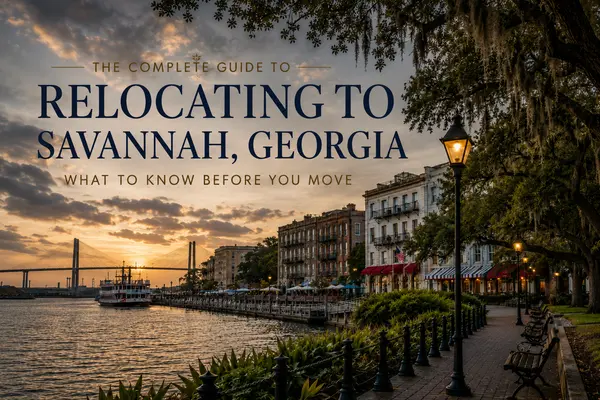
Reach out for my Savannah Relocation Guide and local resources to help you plan your move.
Get in Touch - 1 Click to Everything
Rachael Blunt is a Savannah-area REALTOR® with Epique Realty who assists relocation buyers throughout Savannah, Skidaway Island, Wilmington Island, Pooler, Richmond Hill and the surrounding Greater Savannah market. Her approach combines detailed property and market research, proactive communication and practical guidance to help buyers understand both the home they are purchasing and the community surrounding it.
Categories
Recent Posts


GET MORE INFORMATION